
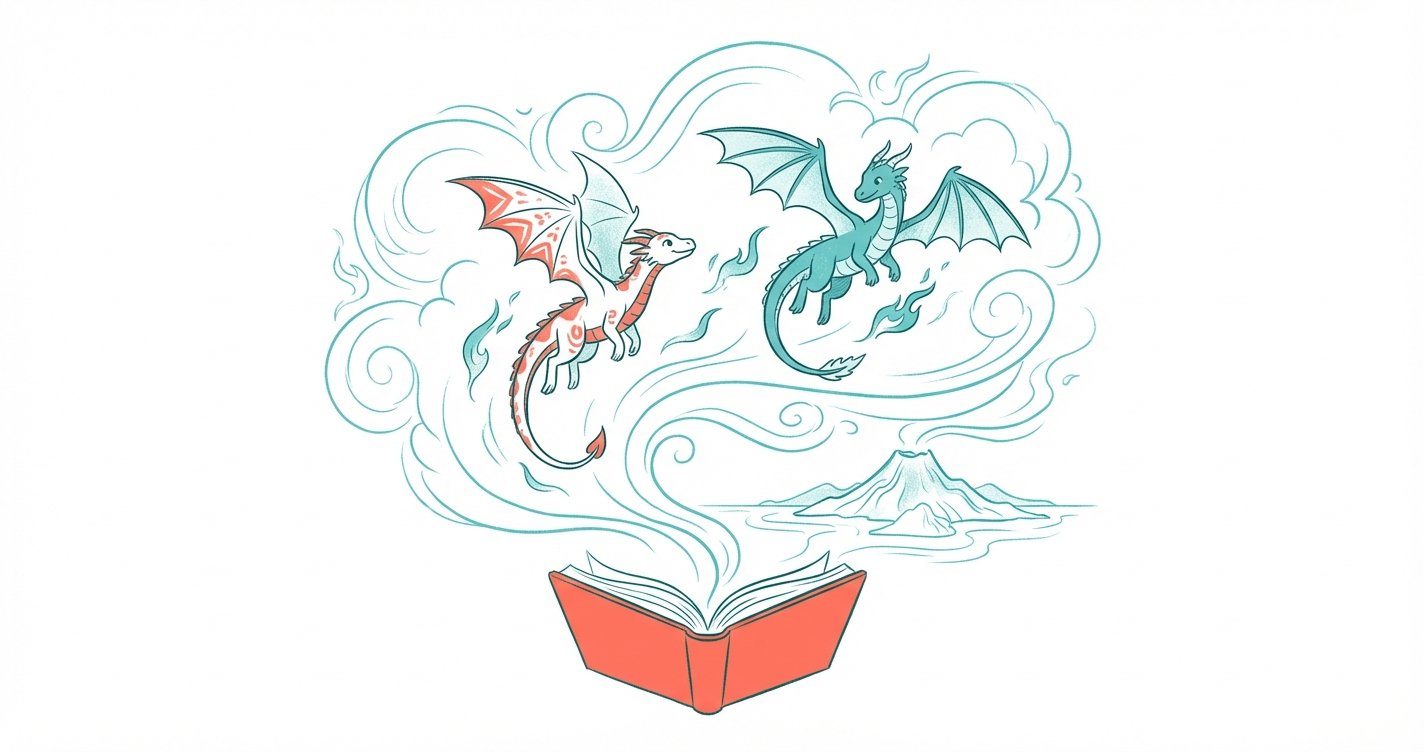
Ask any kid in the 8-12 range what they're reading and there's a reasonable chance the answer is Wings of Fire. The series has sold over 67 million copies and has spent more than 200 weeks on the New York Times Bestseller list. There are graphic novel adaptations, an active fandom, and a devoted community of young readers who know all 15 (going on 20+) books by heart.
What many parents don't know before picking up the first book: Wings of Fire isn't a cute story about dragon friends. It's an adventure series with real battle violence, deaths of characters readers come to care about, and themes that get meaningfully darker across the three main arcs. There's also LGBTQ content starting in Arc 2 that some parents want to know about in advance.
This guide breaks down the series by arc, covers the standalone Legends books, and gives you what you need to make an informed decision.
The Series at a Glance
The Violence Question: What Parents Actually Need to Know
Before getting into arc-by-arc details, it's worth addressing this directly because it's what most parents are searching for: Wings of Fire has consistent, recurring battle violence throughout all 15 books. This includes:
- Dragon battles with claws, fire breath, venom, and talons. These are described with some specificity.
- Named characters (including ones readers spend full books getting to know) dying in battle or by execution.
- Some blood descriptions, particularly around wounds.
- In later books, mind control, forced actions against one's will, and some body horror elements.
None of this is gratuitous in the way that adult horror or thriller fiction is. But it is more than what you'd find in, say, Diary of a Wimpy Kid or even Percy Jackson's earliest volumes. Parents of sensitive readers should know this upfront. The violence is the consistent content concern across all arcs, even when everything else is going fine.
Arc 1: The Dragonet Prophecy (Books 1-5)
The Books
Book 1: The Dragonet Prophecy (2012), Book 2: The Lost Heir (2013), Book 3: The Hidden Kingdom (2013), Book 4: The Dark Secret (2013), Book 5: The Brightest Night (2014).
The Story
Five young dragons were raised in secret to fulfill a prophecy that would end a war devastating their world. Clay, Tsunami, Glory, Starflight, and Sunny are the Dragonets of Destiny, whether they want to be or not. Each book follows one dragonet's perspective as they escape their captors, discover the truth about their tribes, and try to actually stop the war.
Content Details
Violence: Present and recurring. The opening chapters of Book 1 establish the stakes clearly: this world is at war, and dragons die in it. Battle scenes involve fire, claws, and death. Some descriptions of wounds. The violence is integral to the story, not decorative, but it's definitely there.
Death: Named character deaths across the arc. Some of these are villains; some are characters readers may have spent part of a book getting to know. No primary-cast deaths in Arc 1, but secondary and background characters die in ways that feel real.
Captivity and abuse: The dragonets are held captive and mistreated by the guardians who raised them. This involves emotional and physical intimidation. It's treated as wrong and eventually escaped, but it's present.
Scary elements: The war setting creates consistent peril. Some scenes involve executions or the threat of them. The NightWing tribe's secrecy and manipulation creates a creepy atmosphere in Books 3 and 4.
LGBTQ content: None in Arc 1.
Romance: Minimal. Some awareness of attraction between dragon characters, handled at a very low key for middle grade.
Themes: Destiny vs. free will. The cost of war on those who didn't choose it. Found family. Propaganda and how it shapes what people believe about their enemies.
Bottom line for Arc 1: More violence than typical middle grade. The series is marketed for ages 8-12. Battle violence and character deaths are present throughout. No LGBTQ content or psychological horror in this arc. Sensitive readers may find some battle sequences intense.
Arc 2: The Jade Mountain Prophecy (Books 6-10)
The Books
Book 6: Moon Rising (2014), Book 7: Winter Turning (2015), Book 8: Escaping Peril (2015), Book 9: Talons of Power (2016), Book 10: Darkness of Dragons (2017).
The Story
A new school, Jade Mountain Academy, tries to bring dragon tribes together for the first time. Five new dragonet protagonists (with occasional returns from Arc 1 characters) navigate a new prophecy, a shadowy threat, and the complicated politics of an uneasy peace.
Content Details
Violence: Similar to Arc 1. Dragon battles, deaths, and peril continue. The new villain's powers (mind control) add a layer of psychological threat to the physical danger.
Death: Continues across the arc. Some deaths that affect characters readers have been with since Arc 1.
LGBTQ content: This is where it appears. Book 8 (Escaping Peril) features a same-sex relationship between dragon characters as a subplot. Later books in Arc 2 include additional same-sex dragon relationships. Parents who want to know about this content before their child encounters it: it begins in Book 8.
Mind control: The primary antagonist of Arc 2 has the ability to control other dragons' minds and actions. Scenes where dragons are controlled against their will are depicted and are genuinely unsettling in a way that's somewhat new for the series.
Themes: The danger of unchecked power. How fear can be weaponized to control communities. What loyalty means when the person you're loyal to has deceived you. Isolation and belonging.
Bottom line for Arc 2: Violence is comparable to Arc 1. The mind control villain adds psychological intensity not present in Arc 1. LGBTQ content begins in Book 8. Parents who want to be aware of any of these content areas should know this arc is where they appear or escalate.
Arc 3: The Lost Continent Prophecy (Books 11-15)
The Books
Book 11: The Lost Continent (2018), Book 12: The Hive Queen (2018), Book 13: The Poison Jungle (2019), Book 14: The Dangerous Gift (2021), Book 15: The Flames of Hope (2022).
The Story
A whole new continent: Pantala. New dragon tribes, new characters, and a new prophecy. The stakes are higher, the themes are darker, and the content is noticeably more intense than the first ten books.
Content Details
Violence: More intense and widespread. Book 13 (The Poison Jungle) in particular involves a plant-based venom that controls dragons' minds and bodies, with descriptions that shade into body horror.
The HiveWings and LeafWings: The new political situation on Pantala involves a dominant tribe (HiveWings) that controls a subjugated tribe (SilkWings) in ways that clearly evoke real-world colonialism and systemic oppression. This is thoughtful allegory, but it's heavier thematically than the earlier arcs.
Pandemic-like elements: A plant-based infection that spreads between dragons and removes their agency has obvious resonance with pandemic themes. The Poison Jungle was published in 2019, but readers encountering it post-2020 will likely notice the parallel.
Mind control: More prevalent and more disturbing than in Arc 2. The loss of self and agency is a recurring horror in this arc.
LGBTQ content: Continues and is represented in new characters introduced in Arc 3.
Death: The scale and impact of deaths in Arc 3 is larger. The ending of the arc (Book 15) involves significant losses.
Themes: Systemic oppression and resistance. Propaganda and how it shapes even those it harms. Collective trauma. Whether hope is rational when things look hopeless.
Bottom line for Arc 3: This is where the series earns its "darker than you'd expect for middle grade" reputation most fully. Contains mind control, body horror, and pandemic themes. Darker than the first two arcs. Most readers who have come up through Arcs 1 and 2 are ready for this, but it's a meaningful step up. Parents of sensitive readers may want to read alongside their child for this arc.
The Legends Books
Legends: Darkstalker (2016)
A prequel novel following three young dragons in the ancient past, including Darkstalker, a NightWing with extraordinary powers who becomes the primary villain of Arc 2. This is probably the darkest book in the entire franchise. Darkstalker is a compelling but genuinely frightening antagonist: manipulative, dangerous, and written with enough sympathy that readers understand him while recognizing the damage he does. The psychological manipulation and the way he uses genuine care for some individuals while destroying others is sophisticated and unsettling.
Best read after Arc 1 (it has spoilers for that arc) and ideally before or during Arc 2 (Darkstalker becomes important). Not appropriate as a standalone entry point to the series. Darker than the main Arc 2 books.
Legends: Dragonslayer (2020)
Told from the perspective of human characters (called "scavengers" in the dragon world). Three interlocking human stories. Lighter than Darkstalker, with some adventure elements and a more optimistic tone overall. Violence exists but is handled with less intensity.
Can be read between Arc 2 and Arc 3. Lighter in content than Darkstalker.
The Winglets (Short Stories)
Five short novellas (Prisoners, Assassin, Deserter, Runaway, Hero) told from secondary character perspectives. Variable darkness. Assassin, in particular, is one of the darkest pieces in the franchise, telling the story of an IceWing assassin from a moral standpoint that is very different from the heroic main series protagonists. Best for established fans who have read at least Arc 1.
Who This Series Is For
Wings of Fire is best for kids who love adventure, can handle battle stakes and character deaths, and are reading at a solid middle grade level. It is not the right fit for very sensitive readers or kids who find death and violence in fiction distressing. The series doesn't pull punches the way lighter middle grade often does.
- Arc 1: Contains battle violence and character deaths but no LGBTQ content or psychological horror. The series is marketed for ages 8-12.
- Arc 2: Adds LGBTQ content starting in Book 8 and a mind control villain with psychological complexity. Violence is comparable to Arc 1.
- Arc 3 and Darkstalker: Darker themes, mind control, body horror, and pandemic elements. More intense than the first two arcs.
What Shelf Checkout Does for Series Like This
With 15+ main series books, two Legends novels, five Winglets, and graphic novel adaptations, keeping track of where the content escalates in Wings of Fire is exactly the kind of problem Shelf Checkout is built for.
25 content flags you choose yourself. Separate verdicts for each of your kids based on their age and your family's values. Any book with an ISBN, not just the ones someone happened to write a guide about.
Related: Harry Potter Parents Guide · Warrior Cats Parents Guide · Percy Jackson Parents Guide · Hunger Games Parents Guide · Book Reviews for Kids