
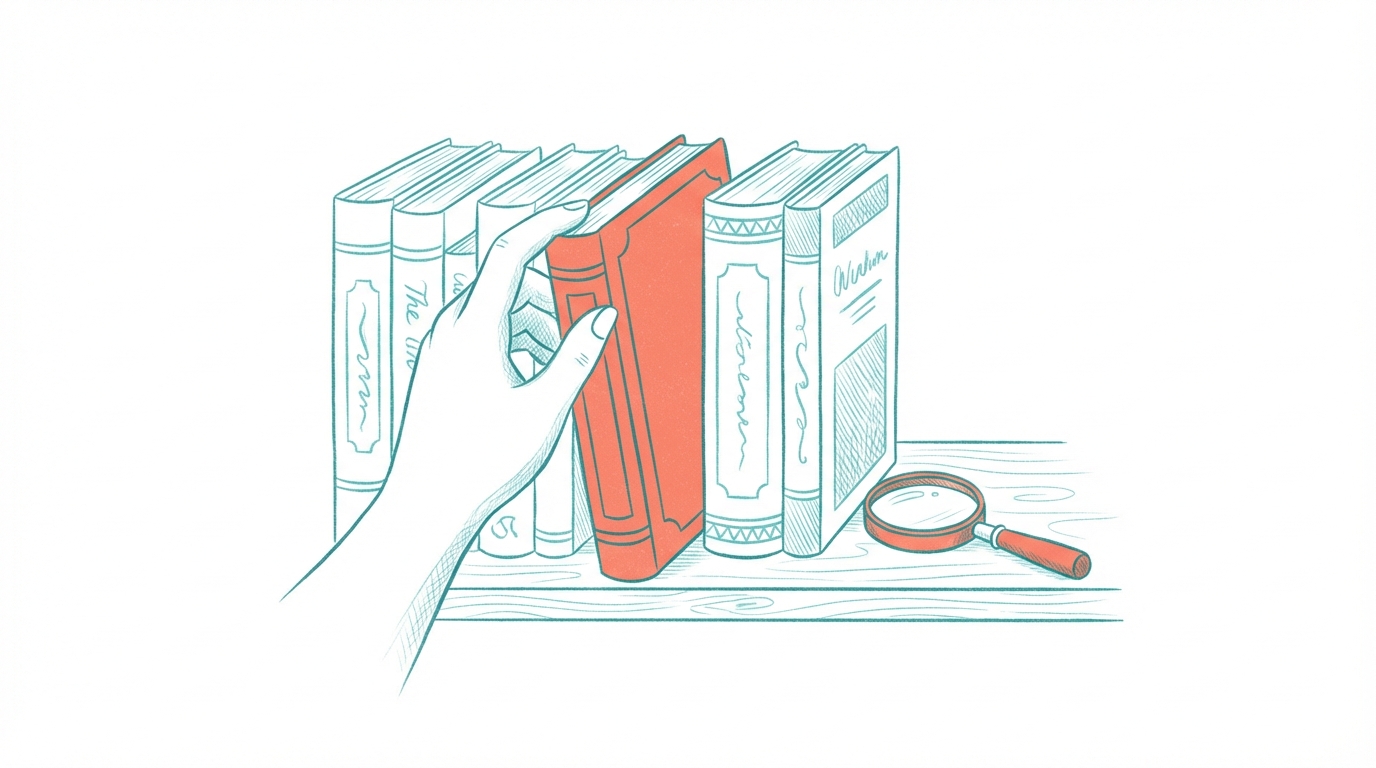
Let's get something out of the way up front. Shelf Checkout is not about banning books. It's not about building walls around your children so they never encounter difficult ideas, dark themes, or perspectives different from your own. It's not a list of approved titles handed down from on high, and it's not a tool for telling other families what they should or shouldn't read.
The Problem We're Actually Trying to Solve
Here's what we kept running into: a book would come highly recommended, show up on a bestseller list, get handed to us by a well-meaning friend, and we'd have almost no useful information about what was actually in it. Not the plot summary. Not the reading level. The content. The themes. The moments that might prompt a hard conversation we weren't ready for, or that crossed a line we hold for our family.
The information existed, somewhere, scattered across review sites and parenting forums and word of mouth. But gathering it took more time than most parents have. So we'd either skip the book entirely out of caution, or hand it over and hope for the best.
Neither of those felt right.
Curation Is Not the Same as Censorship
Censorship is about control. Specifically, using power to prevent others from accessing information or ideas. That's not what a parent does when they decide their eight-year-old isn't ready for a particular book. That's judgment. Discernment. Knowing your child.
Every librarian curates. Every teacher curates. Every thoughtful parent curates. The question was never whether to make choices about what our kids read. The question is whether we're making those choices with enough information to actually be intentional about it.
Shelf Checkout is just information. It doesn't make the decision for you. It gives you what you need to make the decision yourself, which is exactly where that decision belongs.
More Information Means Better Conversations, Not Fewer Books
Here's what we've found: when parents actually know what's in a book, they often say yes more confidently, not less. The fear of the unknown is what causes overcautious avoidance. When you can see clearly what you're dealing with, you can decide thoughtfully.
Sometimes that means waiting a year or two. Sometimes it means reading it alongside your child. Sometimes it means diving in and being glad you did.
That's not censorship. That's parenting with your eyes open.
We built Shelf Checkout because we believe informed readers make better readers. Not more restricted ones. Just more intentional ones.
Related: Discernment in the Age of AI · Recovering the Lost Art of Discernment · When "Hold On a Minute" Wasn't Working Anymore