
Sometimes we listen to audiobooks in the car, filling errand runs and carpool lines with stories that become shared family language.
In those early years, reading together is assumed.
But then something shifts.
They learn to read fluently. They discover series on their own. They begin stacking books beside their bed.
Soon, they're under the covers with a flashlight. Or curled into the coziest corner of the couch with a blanket and a novel.
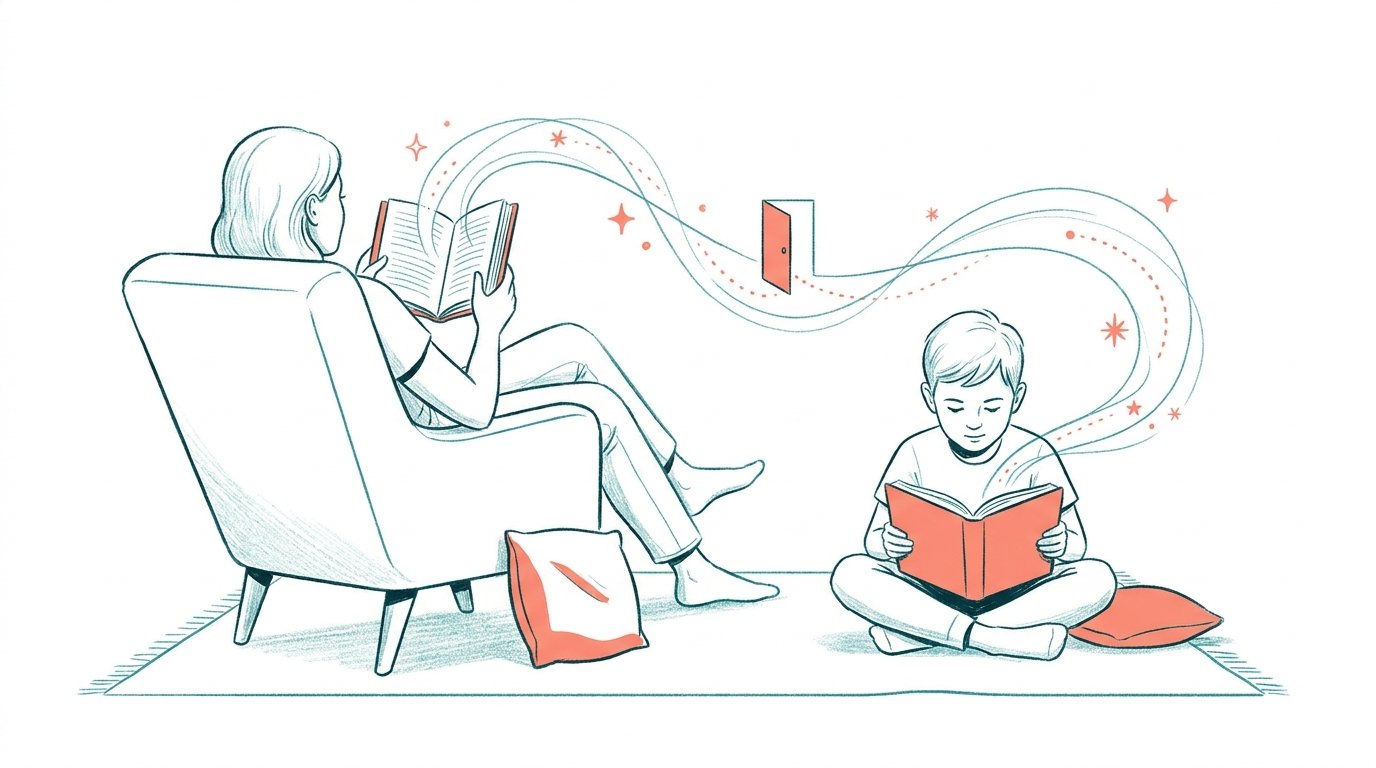
Reading becomes more solitary.
And that's beautiful.
But it can also create quiet distance.
When Reading Becomes a Solo Sport
Independent reading is a gift. It builds imagination, stamina, and confidence.
But as stories become private, parents can slowly feel less connected to what's shaping their child's inner world.
You might find yourself asking:
"What are you reading these days?" "Is it good?"
And receiving the classic:
"Yeah."
That's the whole conversation.
But what if reading didn't have to drift into total independence?
What if it could remain a shared space, even as they grow?
Reading in Tandem
Reading in tandem doesn't have to mean sitting side-by-side every night.
It can look like:
- Listening to the audiobook version of the series they're reading during errands
- Reading the same book after they finish it
- Taking turns reading a chapter aloud just for fun
- Asking them to try the funny accents now (and laughing together when they do)
Shared stories create shared language. They give you reference points:
- "That reminds me of what happened to that character..."
- "What do you think about how she handled that?"
- "Would you have made the same choice?"
Books become bridges.
Talking About Books With Confidence
Sometimes, though, the gap feels bigger.
They've already read half the book. You've never heard of it. You're trying to enter a conversation midstream.
This is where being informed makes all the difference.
Imagine being able to say:
"I don't know much about this book. Can you tell me about it?"
Or even more specifically:
"It sounds like the main character's uncle struggled with addiction. What was that like in the story?"
Suddenly, you're not asking vague questions.
You're asking thoughtful ones.
And that changes the tone entirely.
Why This Matters
When children read alone, they're still being shaped.
Characters influence them. Themes form them. Conflicts stir questions.
If we can stay conversationally connected to those stories, we stay connected to their hearts.
Reading in tandem, even loosely, says:
- "I care about what you're thinking about."
- "I'm interested in what's shaping you."
- "I want to walk with you, not just monitor you."
Shelf Checkout can't replace reading together.
But it can help you enter the conversation with clarity. It gives you an overview of themes and content so you can ask better questions, have deeper discussions, and decide when tandem reading might be wise.
Because reading may be a solo sport.
But raising readers doesn't have to be.
And some of the strongest bonds are built not just by sharing a couch, but by sharing a story.
Related: How Stories Shape Your Child · 5 Questions Before Checking Out a Book · When Book Screening Felt Like a Battle · How Shelf Checkout Works
